Thursday — August 06, 2026
Automatisiert mit einem lokalen KI-Modell erstellt, ohne redaktionelle Prüfung vor Veröffentlichung.
Startup Launch Coach
You are a seasoned startup strategist. Based on my product idea and market, give me a step-by-step launch plan for 2026 that focuses on distribution and user acquisition, not just building. Constrain your advice to actionable, non-obvious tactics that leverage current AI tools.
AI companies destroy rare and non-recoverable physical books

The race for AI supremacy has taken a disturbing turn. To feed the insatiable hunger for high-quality training data, some AI companies have resorted to purchasing and physically destroying rare, often irreplaceable, physical books. These aren't just any books; they are first editions, archival copies, and works from marginalized communities that exist in only a handful of libraries worldwide. The process involves cutting off the spines and feeding the pages through high-speed scanners, a method that is faster and cheaper than handling delicate volumes by hand but renders the original artifact useless.
The scale of the destruction is only now coming to light, with reports indicating that some companies have amassed and destroyed entire private collections. The justification is simple: scanning a book without damaging its binding is slow and requires expensive, specialized equipment. Destroying it is fast, cheap, and yields perfect, flat images for optical character recognition (OCR). For AI labs, every week of delay in training a frontier model costs millions, making the destruction of a few thousand 'old books' an acceptable externality.
However, the backlash has been swift and severe. Cultural institutions argue that these books are not just data; they are physical artifacts with historical, aesthetic, and monetary value that cannot be replicated by a digital scan. The feel of the paper, the binding, the marginalia of previous owners—all of this is lost. Furthermore, the digital copies produced are often locked within proprietary datasets, meaning the public loses access to the physical object and the digital copy simultaneously.
This incident highlights a growing ethical vacuum in the AI industry. As models become more capable, the demand for unique, high-quality data will only intensify. If left unchecked, the 'data gold rush' could lead to the systematic destruction of our shared physical history. The immediate takeaway for the industry is clear: we need robust ethical guidelines for data acquisition that prioritize preservation over convenience, and we need them now.
Meine Einschätzung: This is barbaric. We are literally shredding our cultural heritage to make a chatbot slightly better at trivia. There has to be a line, and this is it.
Mozilla's Inaugural 'State of Open Source AI' Report Is Here
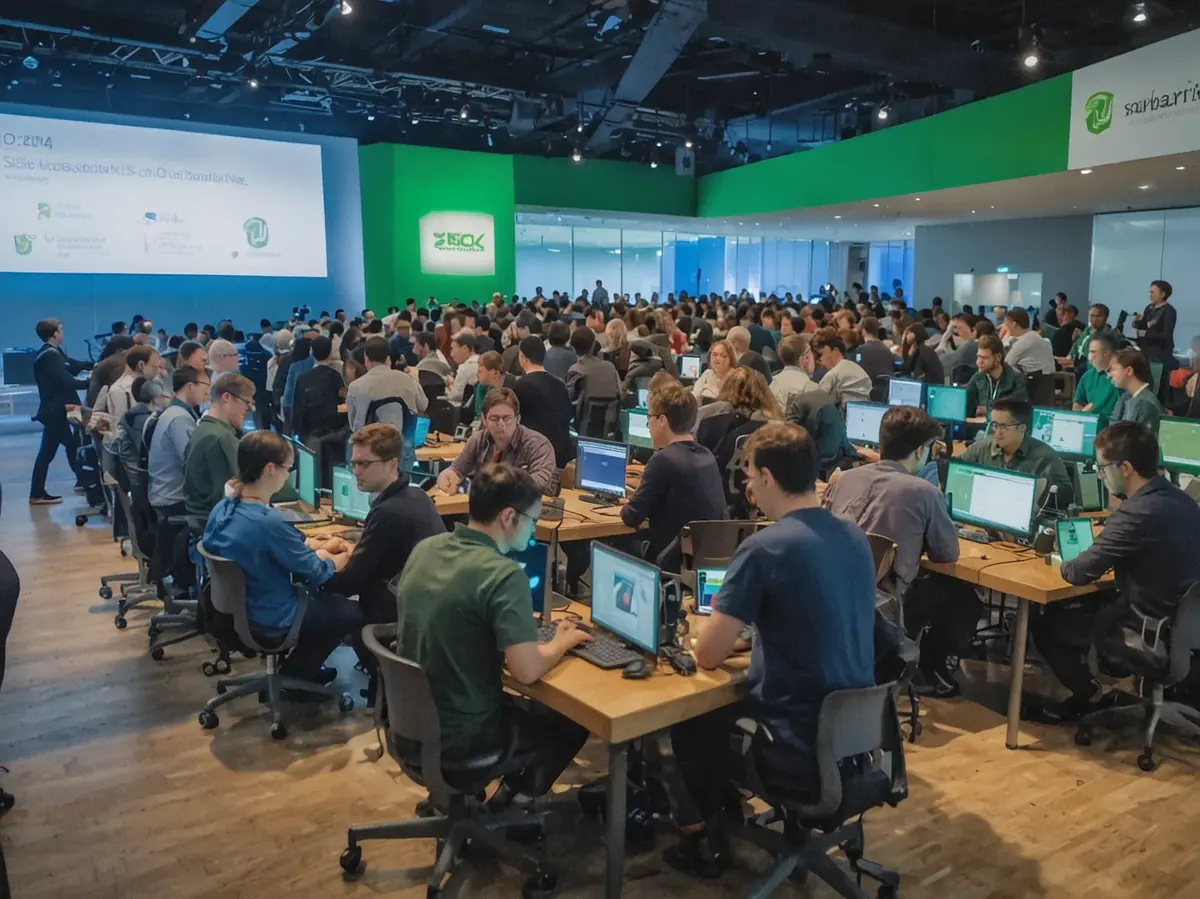
Mozilla, the nonprofit behind the Firefox browser, has stepped into the AI arena with a landmark report titled 'The State of Open Source AI.' With over 500 engagements on Hacker News within hours of release, it has clearly struck a nerve. The report is the first comprehensive, data-driven analysis of the open-source AI movement, covering everything from model releases and licensing to funding and community health.
Early analysis suggests the report paints a complex picture. While open-source models are closing the capability gap with their closed-source rivals (like GPT-5.6), they are struggling to secure the massive compute resources needed for frontier training. The report reportedly highlights a 'compute divide' where only a handful of corporations can afford to train the largest models, potentially creating a new form of centralized control even within the 'open' ecosystem.
Mozilla's report also delves into the nuances of 'open-washing,' where companies release model weights but keep training data and key infrastructure proprietary. It argues that true open-source AI requires transparency at every level, not just the final model file. This is a direct challenge to companies like Meta, which claims openness but retains tight control over its training pipelines.
The implications of this report are massive. For developers, it provides a roadmap for choosing which frameworks and models to invest in. For policymakers, it offers evidence for crafting regulations that either foster or hinder open-source development. And for the general public, it demystifies the power dynamics at play in the AI industry, making it clear that the fight for AI's future is not just about capability, but about control.
Meine Einschätzung: Mozilla is throwing down the gauntlet. This report is going to be the definitive citation for 'open source is the only way' arguments for the next year. It's about time we had data to back up the ideology.
Former OpenAI CTO does what Altman won't, releases a frontier AI model

The AI world was rocked today as Mira Murati, the former CTO of OpenAI, announced the release of a new frontier AI model through her stealth startup. The model, which reportedly rivals the capabilities of GPT-5.6, was released with a permissive license and without the extensive safety disclaimers that have become standard for top-tier models. This move is being interpreted as a direct rebuke of Sam Altman's cautious, commercially-driven approach at OpenAI.
The release is significant for several reasons. First, it proves that the talent leaving OpenAI is not just resting on their laurels but is actively building the next generation of AI. Second, it challenges the notion that frontier AI requires hundreds of millions of dollars and thousands of GPUs to train. Murati's team reportedly used a novel, more efficient training methodology to achieve comparable results with less compute. Third, and most controversially, it bypasses the 'safety' bureaucracy that has slowed down releases at other major labs, putting a powerful model directly into the hands of developers.
Critics are already warning that this 'move fast and break things' approach could lead to dangerous applications. However, supporters argue that open access to frontier models is the only way to democratize AI and prevent a single corporation from controlling the technology. Murati herself has stated that 'AI is too important to be locked in a cage,' framing her release as an act of liberation.
This event fundamentally changes the competitive landscape. OpenAI, Google, and Anthropic can no longer rely on their scale as a moat. If a small, agile team can produce frontier models and release them openly, the entire business model of the AI industry shifts from selling access to selling services and support on top of open models. The 'cat is out of the bag,' and there is no putting it back.
Meine Einschätzung: Holy shit. She actually did it. This is the 'I'm going to do it my way' moment of the decade. The gloves are off, and the 'safety first' narrative just took a massive hit.
OpenAI cuts prices for GPT-5.6 AI models as companies grow sensitive to costs

In a move that has been anticipated for months, OpenAI has announced a substantial reduction in the price of its GPT-5.6 API models. The price cut, which applies to both the standard and 'live' versions, is a direct response to the 'cost sensitivity' of enterprises that have been bleeding cash on AI integration. For many startups, the cost of running a popular AI feature has exceeded their revenue, forcing them to either raise prices or shut down.
The price war is a direct result of the increasing competition in the model market. With the release of highly capable open-source models, developers now have viable alternatives to OpenAI's offerings. If OpenAI charges too much, developers will simply self-host a Llama or Mistral model for a fraction of the cost. This economic pressure has forced OpenAI to slash its margins to retain its customer base.
Industry analysts suggest this is just the beginning. As inference hardware becomes cheaper and more efficient, and as open-source models continue to improve, the cost of AI 'thinking' will plummet. This is excellent news for the broader economy, as it will unlock a new wave of AI applications that were previously economically unviable. However, it puts immense pressure on AI labs to find new revenue streams, likely pushing them further into selling proprietary data or high-margin enterprise services.
The takeaway for developers is clear: now is the time to build. The cost of compute is dropping, and the barriers to entry are falling. If you have an idea for an AI application, the economic math is finally starting to work in your favor.
Meine Einschätzung: About damn time. The pricing on these APIs was getting absolutely ridiculous. This is what competition looks like, and it's beautiful.
Deep Dive
The Token Trap: Why Your Agent Burns 68,000 Tokens on One Wikipedia Page
A viral Hacker News post today highlighted a shocking stat: reading a single Wikipedia page via a modern AI agent consumes 68,000 tokens. To put that in perspective, that is roughly 50,000 words, or the length of a short novel. If you are building AI agents, this is the single biggest threat to your profitability, and understanding it is the key to building systems that don't go bankrupt.
The root cause is 'context stuffing.' When you ask an agent to 'research a topic,' it doesn't just fetch the main content. It fetches the HTML, which includes navigation menus, sidebars, infoboxes, references, and 'See also' sections. It might also fetch linked pages to verify facts. All of this is dumped into the context window, and you are billed for every single token, whether the model uses it or not. The model has to read all of it to find the 500 words that are actually relevant.
To combat this, you must adopt a 'map-reduce' strategy. First, 'map': fetch the raw page and use a cheap, fast model (like a small text-classification model) to extract only the main body text and key metadata. Strip out the HTML tags, the navigation, and the boilerplate. This step can reduce the payload by 90% before it ever hits the expensive frontier model. Second, 'reduce': instead of asking for a summary of the whole page, ask the agent to identify specific sections relevant to the user's query and only process those.
Another critical tactic is to leverage 'retrieval augmentation' (RAG) differently. Instead of stuffing the entire document into the prompt, pre-chunk the text and use a vector database to retrieve only the top 3-5 most relevant chunks. This is the difference between reading the whole encyclopedia and reading just the article you need. It requires a bit more upfront engineering but can cut your token usage by 95%.
Finally, consider 'caching.' If many users are asking about the same Wikipedia page, don't re-process it every time. Cache the extracted, cleaned text and the final answer. Today's AI costs are not immutable; they are a direct function of your engineering discipline. The companies that survive the 2026 AI winter will be the ones that treat tokens like gold, not like water.
The smart money is on efficiency, not raw power. Build lean, build mean, and don't burn the library down.